How we are helping peatlands
How we are helping peatlands
Peatland restoration is an integral part of sustainably managing land. To date we have put almost 13,000 hectares of degraded peatlands on the road to recovery.
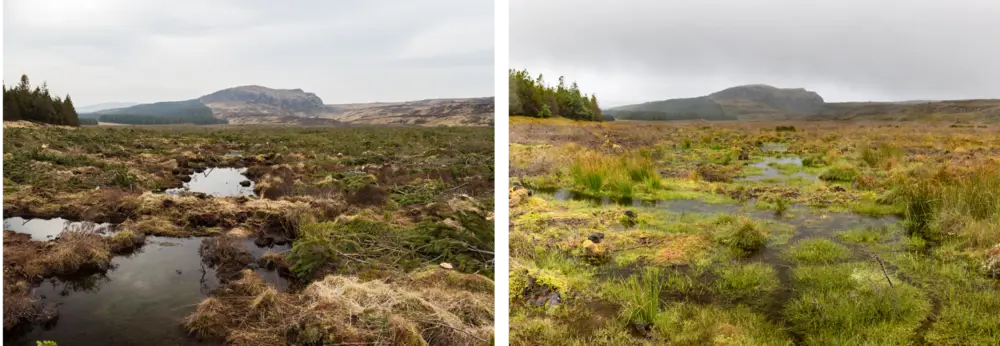
In the past, trees were grown in areas that are now protected by current environmental policy and practice. Our work to restore peatlands involves re-wetting to restore their hydrological behaviour. It can also include removing trees. The goal of these techniques is to help the valuable peatland habitats to recover quickly.
The water table usually rises rapidly following rewetting, leading to the return of peatland species such as cotton grass, heathers and sphagnum mosses. These species are important indicators of a return to a healthy ecosystem. The vegetation sequesters carbon and will in time restore the peatland’s ability to withstand droughts and wildfires. We are constantly looking to improve the cost-effectiveness of forest-to-bog rewetting techniques.
How are we going to do it?
We aim to manage peatlands in an optimal way to maximise the benefits they can provide. We work with other organisations, contractors and people to help deliver this. Find out more about how we manage peatlands here.
We are one of the Scottish Government agencies that is part of Peatland Action - a national programme aimed at restoring peatlands, which are crucial for biodiversity and carbon storage.