

The three crossbill species found in our forests are:
- crossbill
- Scottish crossbill
- parrot crossbill
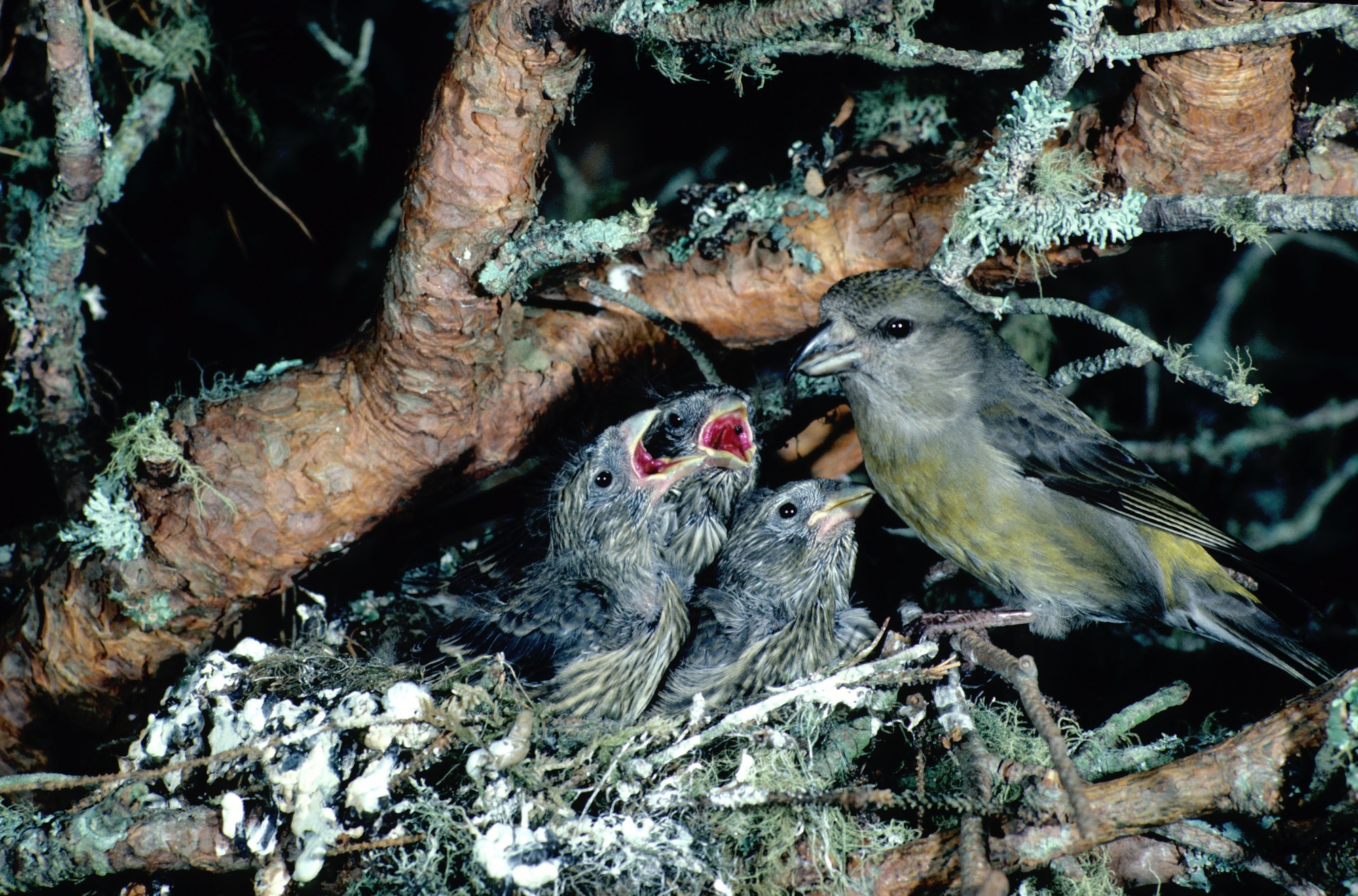
The Gaelic name for a crossbill is cam ghob or 'squinty beaked'. It's this clever tool (their beak) that allows the crossbill to open cones and eat the nutritious seeds.
Where they live
The Scottish crossbill lives in the pine woods and conifer forests of northern Scotland. It's Britain’s only endemic species, which means that you won’t see it anywhere else in the world.
What they eat
Crossbills’ beaks are perfectly adapted for taking seeds from the cones of pine, spruce and larch. They particularly like Scots pine seeds but will feed on whatever cones are most plentiful. We manage forests where the Scottish crossbill lives so the trees produce a good and continual supply of cones.
How to see them in the wild
Where you can see them
There are crossbills in the pinewoods and conifer forests of Sutherland, Moray, Banff and down into lower Deeside.
When you can see them
They're in our forests all year round and most obvious when they're feeding. On winter and spring mornings you might see small flocks of crossbills clustering around ripening cones. Or you could come across the discarded cones on the forest floor.
What to look out for
All three species look alike. You probably won't know if you've seen a Scottish crossbill unless you’re an expert at identification or can record their calls. A sonogram is the only reliable way to tell them apart.